
Ready-to-Eat Shelf Stable Self-Paced Inspection Course 1900 is a Center for Learning (CFL) training that can be accessed through AgLearn. This course should require approximately 20 total hours to complete. The course topics addressed include RTE and shelf stable processes, product-related food safety hazards, Listeria monocytogenes process controls and preventative measures, procedures for verifying compliance with 9 CFR Part 430 "Listeria Rule" regulations, and RTE sampling tasks. This training course, which is designed and based on FSIS Directives 5000.1, 5300.1, 7230.1, and 10,240.4, should be completed before the end of the fiscal year.
Target Audience: Consumer Safety Inspectors who have been assigned to establishments which produce ready-to-eat or shelf stable products.
Course Logistics: Participants do not need to register for the course through Center for Learning (CFL). Simply log in to AgLearn, go to “Learn” > “Find Learning” (top of the page), and enter “FIAPP 2200” as your search term. Make sure to select the course tile with the current fiscal year and click the “Enroll me” button. Once you click to start the course, you will be routed to the FSIS Training Site (learning management platform)—please ignore the red “Log in” button in the upper right corner!
Once you have reviewed all the training material, simply close the course window to return to the course page in AgLearn and verify that there is a checkmark next to the course name. The completion certificate should then be available.
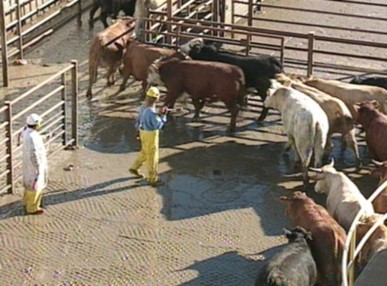
This is a self-paced open enrollment course for Food Inspectors intending to seek promotion to Consumer Safety Inspector within 6 months, rather than the standard 1 year minimum. The course focuses on authority, food inspector duties, safety, food microbiology, poultry and livestock inspection, HACCP, and sanitation. Participants may enroll themselves throughout the fiscal year using AgLearn. Approximately 40 hours total is allotted to complete the training.
Target Audience: Food Inspectors who were hired at GS-5 level at difficult to fill establishments (as identified by Office of Field Operations and FSIS Human Resources, Office of Management) and from a Food Inspector announcement that was issued on or after October 31, 2023.
Course Logistics: Participants do not need to register for the course through Center for Learning (CFL). Simply log in to AgLearn, go to “Learn” > “Find Learning” (top of the page), and enter “FIAPP 2200” as your search term. Make sure to select the course tile with the current fiscal year and click the “Enroll me” button. Once you click to start the course, you will be routed to the FSIS Training Site (learning management platform)—please ignore the red “Log in” button in the upper right corner!
Once you have reviewed all the training material, simply close the course window to return to the course page in AgLearn and verify that there is a checkmark next to the course name. The completion certificate should then be available.
The DVMO course is required for new District Veterinary Medical Officers (DVMOs). This self-paced training is recommended to be completed by the DVMO over 32 working hours in a four-week time frame, however it may take more than four weeks depending on DVMO workload. The DVMO may spread out when they access the training according to their work schedule (e.g., access the training a few hours each day or complete it all at once over 4 working days, etc.).
The training provides an in-depth review of the role of the DVMO in Humane Handling (HH) and Good Commercial Practices (GCP) focused duties, as well as relevant soft skills. The course will cover HH/GCP regulatory requirements, policies, and the DVMO’s role in: HATS verification, stunning/handling, verifying if an establishment implements a Systematic Approach, conducting verification visits and DVMO enhanced outreach visits, HH/GCP noncompliance and enforcement, and other HH/GCP related correlation, data, and duties assigned to the DVMO. It will also cover APHIS MOUs, time management, managing up, maxiflex work schedule, transition training, and communications.
Course Logistics: Participants do not need to register for the course through Center for Learning (CFL). Simply log in to AgLearn, go to “Learn” > “Find Learning” (top of the page), and enter “DVMO 2300” as your search term. Make sure to select the course tile with the current fiscal year and click the “Enroll me” button. Once you click to start the course, you will be routed to the FSIS Training Site (learning management platform)—please ignore the red “Log in” button in the upper right corner!
Once you have reviewed all the training material, simply close the course window to return to the course page in AgLearn and verify that there is a checkmark next to the course name. The completion certificate should then be available.

This 8-hour course focuses on canning regulations, process deviations, investigation of canned food spoilage incidents, and case studies. It is targeted at CSIs who have been assigned job duties in a thermal processing establishment.
Course Logistics: Participants do not need to register for the course through Center for Learning (CFL). Simply log in to AgLearn, go to “Learn” > “Find Learning” (top of the page), and enter “FIAPP 2200” as your search term. Make sure to select the course tile with the current fiscal year and click the “Enroll me” button. Once you click to start the course, you will be routed to the FSIS Training Site (learning management platform)—please ignore the red “Log in” button in the upper right corner!
The PHIS Electronic Export Certification Course is an independent self-paced online training. Participants may access the course via AgLearn at their convenience but should complete it before the end of the fiscal year. Participants should allow approximately 6 hours total (during duty hours) to review the material, but do not have to complete the training in a single day or session.
This training focuses on how to perform the export certification functions in PHIS as outlined in FSIS Directive 13,000.5. It covers how to perform the Export Certification task, including both Consumer Safety Inspector (CSI) and Public Health Veterinarian (PHV) roles. It also covers how to use the module to approve or reject export applications, issue replacement certificates, and sign the export certificate. In addition, a review of how to process the FSIS Form 9080-3 (Establishment Application for Export) in PHIS is covered. Participants will be able to download, save, or print resources that are included within the course.
Target Audience: Consumer Safety Inspectors, Public Health Veterinarians, or other OFO personnel whose assignments require them to certify exports using the PHIS module.
Course Logistics: Participants do not need to register for the course through Center for Learning (CFL). Simply log in to AgLearn, go to “Learn” > “Find Learning” (top of the page), and enter “PHIS Export” as your search term. Once you click to start the course, you will be routed to the FSIS Training Site (learning management platform)—please ignore the red “Log in” button in the upper right corner!
Once you have reviewed all the training material, simply close the course window to return to the course page in AgLearn and verify that there is a checkmark next to the course name. Next, complete the 10-question quiz. Once the quiz is complete, you will receive AgLearn credit for the training.
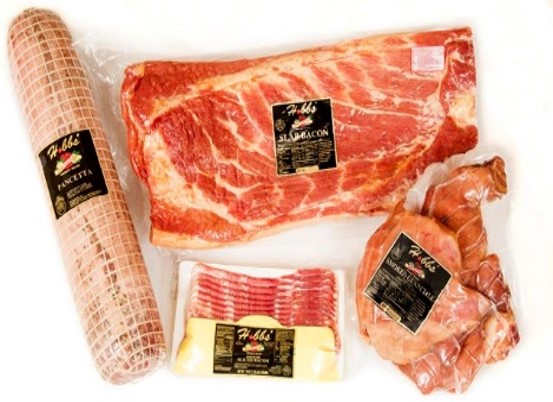
The course provides detailed instructions and guidance about non-food safety consumer protection (NFSCP) and the five NFSCP tasks used to verify regulatory compliance: Net Weight, General Labeling, Labeling-Product Standards, % Yield/Shrink, and X % Solution tasks.
Target Audience: This training course is intended for inspection program personnel (IPP) with basic processing experience who will be covering more complex processing assignments. It has two general goals:
1) Familiarize IPP with the non-food regulations and the preparation of various inspected products, including key processing steps, commonly used ingredients and their purpose, and ingredient verification calculations.
2) Provide the necessary job skills and knowledge IPP need to verify that labeled products are not economically adulterated or misbranded.
Information covered in this course includes FSIS statutory authority and specific FSIS regulations and policies IPP enforce in establishments that process and label inspected products. General labeling requirements and specific labeling requirements for products labeled under a standard of identity will be addressed. Regulatory compliance calculations, including restricted ingredient, maximum or minimum meat or poultry component, added solution, and % yield calculations, will also be demonstrated.
Course Logistics: Participants do not need to register for the course through Center for Learning (CFL). Simply log in to AgLearn, go to “Learn” > “Find Learning” (top of the page), and enter “FIAPP 2200” as your search term. Make sure to select the course tile with the current fiscal year and click the “Enroll me” button. Once you click to start the course, you will be routed to the FSIS Training Site (learning management platform)—please ignore the red “Log in” button in the upper right corner!
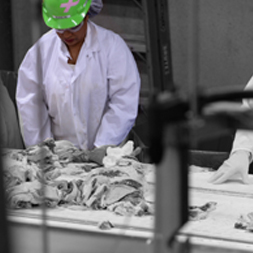
This course provides introductory training on the Adulterated Product Monitoring (APM) functionality of the Public Health Information System (PHIS), which is used to document industry notification that an establishment has received or shipped adulterated product that is in commerce. Previously, only OIEA and OFO District Office personnel have used APM for reporting. However, this course is designed for in-plant CSIs and PHVs who may now also have a role in APM reporting. This training focuses on how to utilize the APM functionality in PHIS as outlined in FSIS Directive 8140.1, Revision 2. It covers background on the requirements for reporting the receipt or shipment of adulterated product, the active PHIS reporting tools, how Draft Reports are initiated, and the information IPP will enter to contribute to reports.